VR training for health practitioners
Practise the emergencies too rare to rehearse.
The emergencies that decide a patient’s outcome in minutes are the ones a ward sees least, so a team rarely gets to keep them sharp. NeuroImmersia lets practitioners rehearse them in VR, as often as they need, and debriefs every attempt.
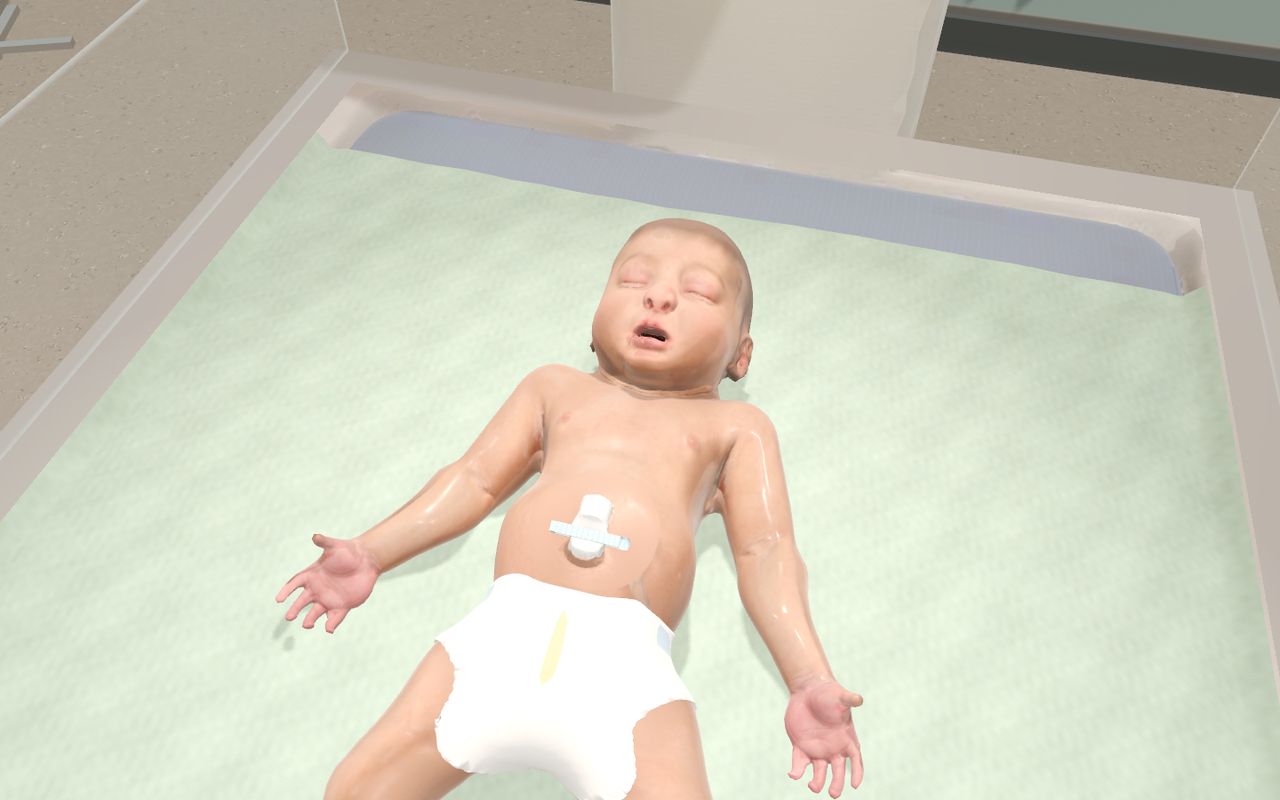
Why practise often
Rare by nature
In newborn care, 1 to 3 newborns in 1,000 receive chest compressions or emergency drugs. Few practitioners see enough of them to stay ready.1
Skills fade
One course is not enough. In a study of nursing students, the time to start ventilating a simulated newborn grew from 57 seconds right after a course to 90 seconds four months later.2
Regular practice helps
After brief weekly practice and monthly re-training began at one hospital, deaths in a newborn’s first 24 hours fell from 11.1 to 7.2 per 1,000 births.3
How a session works
- 01
Step in
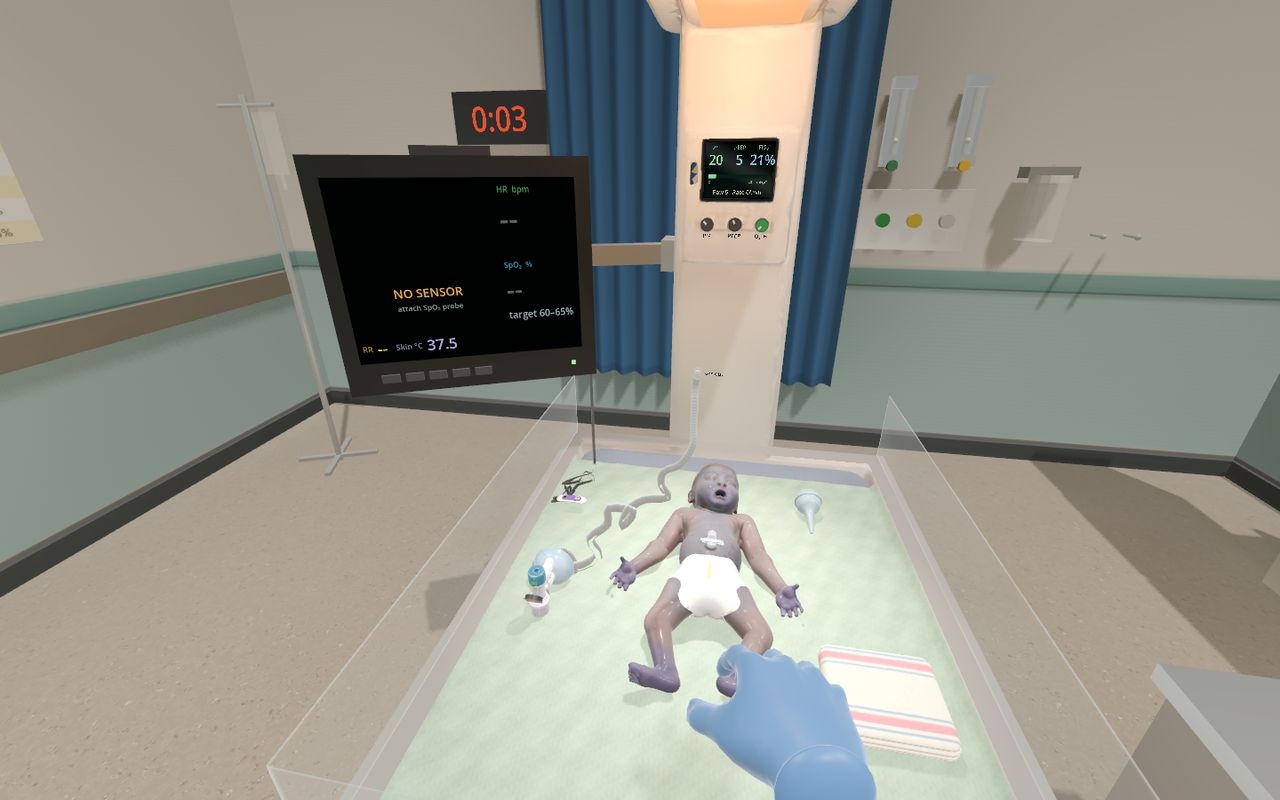
The case begins: a patient, the tools within reach, the clock running.
- 02
Act
Do what the case needs. The patient and the monitor respond to every step, and to every step missed.
- 03
Debrief
A score, every missed or late step, and the critical minutes timed.
Who it is for
Hospitals
Practice between courses, on your staff’s own schedule, for the cases a ward sees least.
Universities and skills centres
More practice for every student, each attempt scored and debriefed.
Pilot it with us
The first trainer is built, and we are looking for hospitals and skills centres to pilot it with us. We bring it to you, set it up, and show your educators how to run it.
Request a demoQuestions
Does it replace courses and manikins?
No. It adds practice between courses, as often as your staff need it.
Is it a medical device?
No. It is a training tool, and its physiology is a teaching approximation.
Can we see it first?
Yes. We bring it to your hospital or skills centre for a demo.
Which emergencies come next?
We choose them with clinical educators. Tell us which ones your staff need to practise.
Is the trainer in Arabic?
Not yet. It runs in English today; Arabic is next.
Sources
- AAP, Textbook of Neonatal Resuscitation, 9th ed., 2025, pp. 2, 12, 62.
- McCaw et al., Advances in Simulation, 2023: simulated cases, 49 nursing students.
- Mduma et al., Resuscitation, 2015: before and after, one hospital in Tanzania; brief weekly practice and monthly re-training.